
boxjoy.in is blocked
This page has been blocked by an extension
- Try disabling your extensions.
ERR_BLOCKED_BY_CLIENT
This page has been blocked by an extension
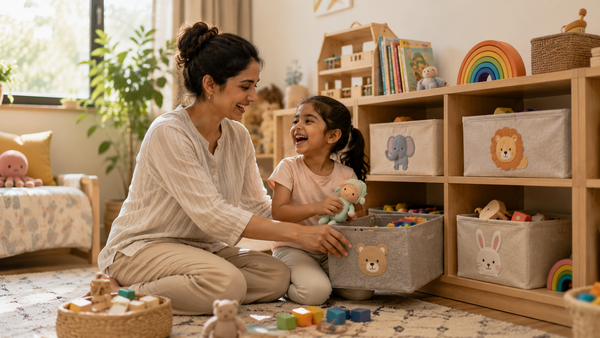
It can seem like a never-ending cycle to keep children's toys organized. After you clean up, the area appears serene and orderly, but a few hours later, toys are strewn all over the place once more. Usually, effort or discipline is not the issue. The majority of toy organization systems are made for adults, not children.
The secret is to design a system for organizing toys that kids can comprehend, enjoy, and actually maintain on their own. Organization ceases to feel like a chore and becomes a part of their everyday routine when the system works for them.
Despite their attractive appearance, many toy storage concepts fall short in practice. Children find cleanup to be overwhelming when there are too many categories, tiny bins, and complex regulations.
An effective system for organizing children's toys should be:
Children are much more likely to participate and stick with cleanup when it seems easy. For more family-friendly organization ideas, explore our complete guide.
Reduce the number of toys before organizing. Any system becomes difficult to maintain when there are too many toys.
Take a seat with your child and play with toys. Talk in a cheerful and light-hearted way. Ask questions like:
Create three separate groups:
Youngsters who take part in decluttering feel appreciated and are more likely to maintain what is left.
Sorting things in detail is a challenge for kids. Instead of breaking up toys into many small groups, use broad, straightforward categories.
Effective examples include:
Fewer categories lead to less confusion and faster cleanup. The goal is progress, not perfection.
A child's storage should be suitable for their strength, height, and abilities. This is where the right children's storage solutions make all the difference.
The best options include:
Avoid high shelves, heavy lids, and concealed storage. If kids can't easily access it, they won't use it.
Labels take the guesswork out of cleanup and make toy organization intuitive for children.
Depending on how old your child is, use:
It feels natural for kids to put things away when they know exactly where toys belong.
Extended cleanup times can be intimidating. Routines that are brief and predictable are more effective for maintaining organized toys.
Try:
Speed is not as important as consistency. Cleanup eventually becomes automatic.
Toys don't have to be out all at once. This simple toy storage strategy reduces clutter significantly.
Put some toys away and switch them out every few weeks. Rotating toys:
Children play more imaginatively and clean up more readily when there are fewer toys available.
When teaching responsibility feels doable, it works best. Here's how to support your child's independence:
Practical advice:
Children are more self-assured and eager to assist when they feel capable. For more ways to create an organized kids' space, check out our room organization guide.
The best toy organisation system for kids is the one that works every day, not the one that looks flawless. You can empower kids to take charge of their space by keeping storage straightforward, visible, and simple to maintain.
Toy organisation becomes a habit that kids can genuinely sustain with the correct setup and gentle consistency.
It can make all the difference to have the proper storage.
Ready to create toy organization kids will actually maintain? See kid-approved storage options that encourage self-cleaning and learn more toy organization ideas. Discover storage solutions designed to make organization effortless for the whole family.
Shop Kids Storage Solutions →Use broad categories (building toys, dolls, cars), low open storage bins, and visual labels with pictures or simple words. Keep storage at your child's height and avoid complicated sorting systems. The simpler the system, the more likely kids will maintain it independently.
Rotate toys by keeping only 1/3 to 1/2 out at a time, store the rest away. Use vertical storage like wall shelves or over-door organizers. Choose multi-functional furniture like storage ottomans or benches. Keep categories broad to minimize the number of bins needed.
Limit to 4-6 broad categories maximum for young children (ages 2-6) and 6-8 categories for older kids (ages 7+). Examples: building toys, dolls/stuffed animals, vehicles, art supplies, and books. Too many categories make cleanup overwhelming and harder to maintain.
Rotate toys every 2-4 weeks depending on your child's age and interest level. Younger children (2-4 years) may benefit from more frequent rotation (every 2 weeks), while older children can go 3-4 weeks. Watch for signs of boredom to determine the right timing.
Involve them in creating the system, use fun visual labels, keep cleanup time short (5-10 minutes), make it a game with music or timers, and praise effort over perfection. Most importantly, ensure storage is truly accessible—kids won't use systems that require adult help.
Search our store
This page has been blocked by an extension


This page has been blocked by an extension